Building or owning a barndominium in Central Texas comes with unique challenges that traditional homes don't face. You're dealing with metal structures that can rust, extreme temperature swings from scorching summers to cold winter fronts, and energy bills that can spiral out of control if you don't insulate correctly.
The question isn't whether to insulate your barndominium — it's how to do it the right way.
At Spray Foam of Texas, we've insulated hundreds of barndominiums across Central Texas, from Bell County to Austin. We've seen what works, what fails, and what costs homeowners and contractors thousands in repairs down the road. This guide will walk you through everything you need to know about barndominium spray foam insulation so you can make the right decision for your project.
Insulation is always something you should invest in upfront. Yes, we are a spray foam company, so it’s not a surprise that we’ll tell you that. But we say this from experience: homeowners and contractors who cut corners on insulation face premature failures, rust damage, astronomical energy bills, and pest infestations that could have been easily prevented.
These are a few consequences of going cheap that we’ve seen while out on the job in Texas.
Metal buildings face a unique enemy that wood-frame homes don't: condensation. When you have hot temperatures outside and cold air conditioning inside (or vice versa), that temperature differential creates moisture between your metal panels and interior walls.
Without a proper vapor seal, that moisture leads to rust. It might not show up in the first five years, but after ten years? You'll start seeing rust eating away at your metal structure. Once rust starts, it's a slow deterioration that compromises your entire building.
Barndominiums are often built in rural areas where field mice and other pests actively search for warm places to nest, especially in winter. Traditional batting insulation provides the perfect nesting material and doesn't seal out these unwanted guests. We've seen rodents tear up batting insulation, create health hazards, and cause thousands in damage.
If you know all that and are thinking you can still try and go cheap by DIY’ing, we wouldn’t recommend it. However, we do see the appeal. DIY spray foam kits are readily available at hardware stores; they seem straightforward, and they promise savings. But here’s what we see when we’re called to redo a DIY job: a 50% failure rate.
That means that even if the application goes well, you might only get 50% of the expected yield because these chemicals require precise temperature control and proper mixing ratios. A standard DIY kit costs around $750 but might only give you a fraction of the coverage you need. For a full barndominium, that investment adds up fast. And, if it fails, you're stuck with odors, poor performance, wasted money, and wasted time.
Poor insulation in a barndominium is uncomfortable and expensive. Without an airtight thermal envelope, your HVAC system works overtime trying to maintain comfortable temperatures. In Central Texas, where we see 100+ degree summers and sudden cold fronts in winter, an inefficient barndominium can cost you hundreds of dollars extra every month in utility bills.

Batt insulation is the traditional pink or yellow fiberglass material commonly used in wood-frame homes. For barndominiums, however, it has serious drawbacks:
Problems with batt insulation:
Blown-in insulation (loose-fill cellulose or fiberglass) is sometimes used in attic spaces but presents problems for barndominiums:
Issues with blown-in insulation:
Rigid foam board insulation can be used in metal building insulation applications, but it doesn’t seal out air leaks, and requires careful installation to prevent air gaps.
The right spray foam system protects your barndominium, saves on energy bills, and ensures comfort for years to come.
When you invest in insulating your barndominium the right way with quality closed-cell spray foam:
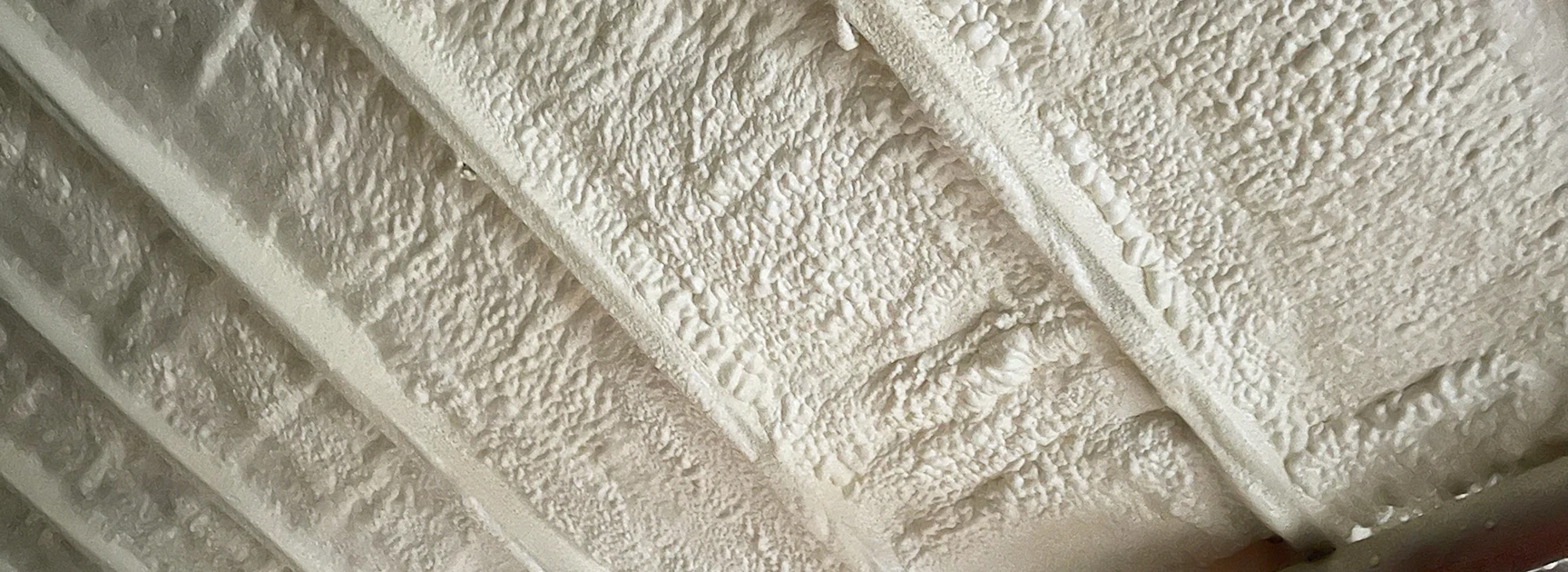
Understanding the Spray Foam System (Open-Cell vs Closed-Cell)
Closed-Cell Spray Foam is the gold standard for barndominium insulation. Here's what makes it special:
Closed-cell spray foam is a type of insulation where the tiny foam bubbles (cells) are completely closed off from one another, creating a dense and rigid structure. Think of it like a styrofoam cooler, solid and moisture-proof.
Open-Cell Spray Foam is softer and spongy (like a kitchen sponge) with cells that are broken or open. While it costs less, it’s not waterproof, so air and moisture can pass through.
The right way to insulate a barndominium starts with understanding what you're trying to achieve. You need to create a complete thermal and moisture barrier while maintaining structural integrity (that means you want to seal any and every place where air and water can get into the building, no matter how small that opening may be).
Step 1: Closed-Cell Spray Foam on All Metal Surfaces Apply a minimum of one to one and a half inches of closed-cell spray foam throughout the outer shell on your roof and walls. This creates a vapor seal against the metal and provides structural stability to the building.
Step 2: Sealing the Envelope Proper insulation isn't just about the walls and ceiling, it's about sealing every gap where air can infiltrate. This means:
This envelope sealing is what transforms your barndominium from a metal building into an efficient home that performs like a Yeti cooler, keeping temperatures consistent regardless of what's happening outside.
Step 3: Additional Insulation for Maximum Efficiency Once you have that closed-cell vapor barrier in place, you can add open-cell spray foam on top. Since the closed-cell layer already created the moisture barrier, the open-cell foam adds additional R-value without needing vapor barrier properties.
With all that in mind, let’s talk numbers. Yes, the upfront investment is higher on spray foam. You'll spend approximately 50% more than traditional insulation. But the benefits far outweigh the costs, no matter how you look at it.
Spray foam is priced by board feet (square foot by inch). The industry average sits around $1.30 per board foot. For a standard 2,000 square foot barndominium with ten-foot walls and standard roof pitch, you're looking at approximately 10,000 board feet, which comes out to around $13,000 for a complete, properly insulated home.
This assumes three inches on the ceiling and two inches on the walls, the recommended specification for an efficient barndominium in Central Texas.
Depending on the complexity of your project, insulation quality, and contractor, you might see prices ranging from $5 to $10 per square foot of living space at the highest premium end. Larger homes with more foam typically get better per-foot pricing.
The 40% average savings on utility bills means your insulation investment pays for itself over time. The return on investment is clear, and the longevity means you'll never need to replace it.
For barndominiums in Central Texas, here are the R-value recommendations:
Ceilings: R-22 to R-38
Walls: R-14
These R-values represent the minimum for comfort and efficiency. Your budget determines how much foam you want, but these standards give you an efficient home that performs well year-round.
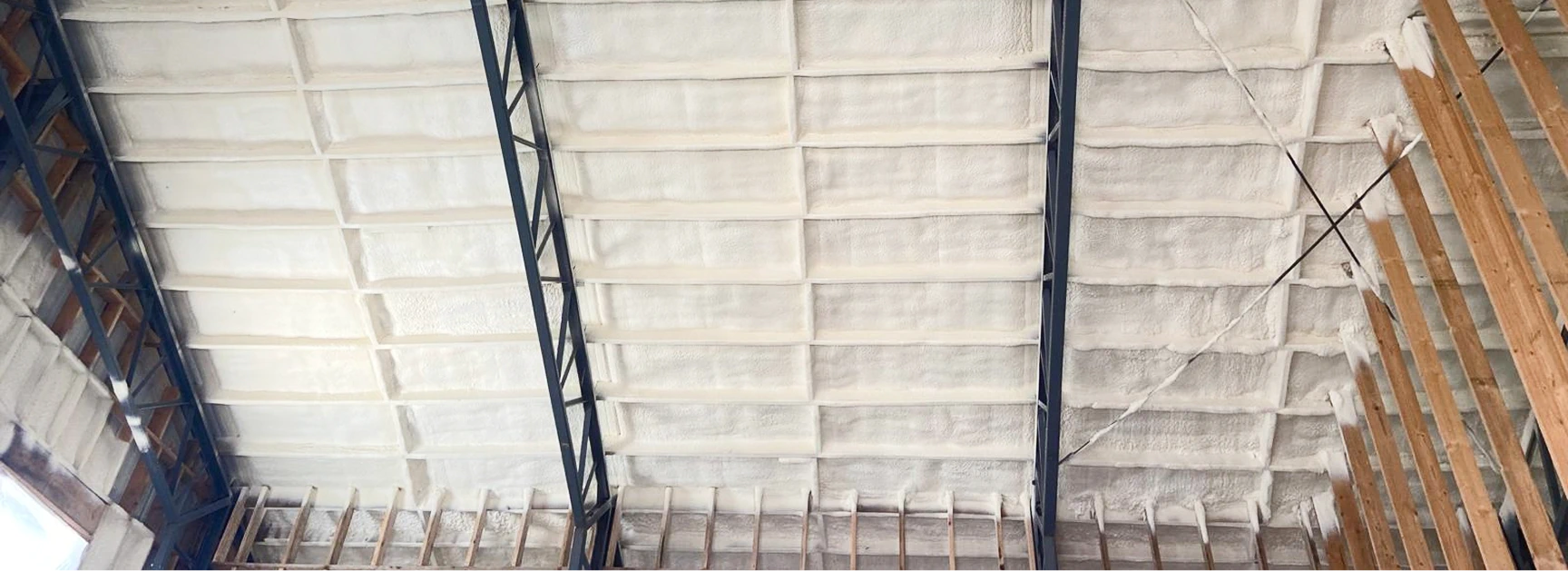
Over the years, we've seen every mistake in the book when it comes to barndominium insulation. Here's how to avoid the most costly ones:
We mentioned the 50% failure rate earlier, but it's worth repeating. DIY spray foam kits seem economical, but the reality is harsh. These chemicals operate in a reactor at specific temperatures and pressures. If conditions aren't right, the foam doesn't cure properly, leaving you with:
Not all spray foam is created equal. Some contractors use cheaper, generic foam that hasn't been properly tested or might even come from Mexico without proper specifications. Bad foam causes odors and performance issues that can't be fixed without removal and replacement.
Spray foam application isn't just about spraying chemicals on metal. Professional preparation includes:
Contractors who skip preparation can easily ruin doors, windows, and floors, or paint your metal building's exterior with overspray.
Some spray foam companies are really just sales brokers. They take your information, sell the job to the lowest bidder, and hand it off to "Chuck in a truck"—some subcontractor you've never met. When something goes wrong, or you need warranty work, you're calling a salesperson who has no control over the installer.
So, how do you avoid those mistakes? By hiring the right spray foam company. Not all spray foam contractors are created equal. Here's your checklist for vetting providers:
Ask specifically:
Quality contractors will readily provide this information. Keep in mind that if their foam doesn’t come from a reputable company or is a cheaper product, the product has a strong odor and doesn’t seal properly. The foam should be odorless after installation.
Ask detailed questions:
The answers will tell you whether they're professionals or just sprayers.
Make sure the company you hire is actually doing the work:
Avoid brokers and middlemen who add costs without adding value.
Ask about warranty terms:
At Spray Foam of Texas, we offer a two-year warranty because realistically, if anything's going to happen, it happens in the first 12 months as you go through a full cycle of Central Texas weather. Most issues show up within the first year. And if that happens, we’ll come back and make it right — that's our commitment.
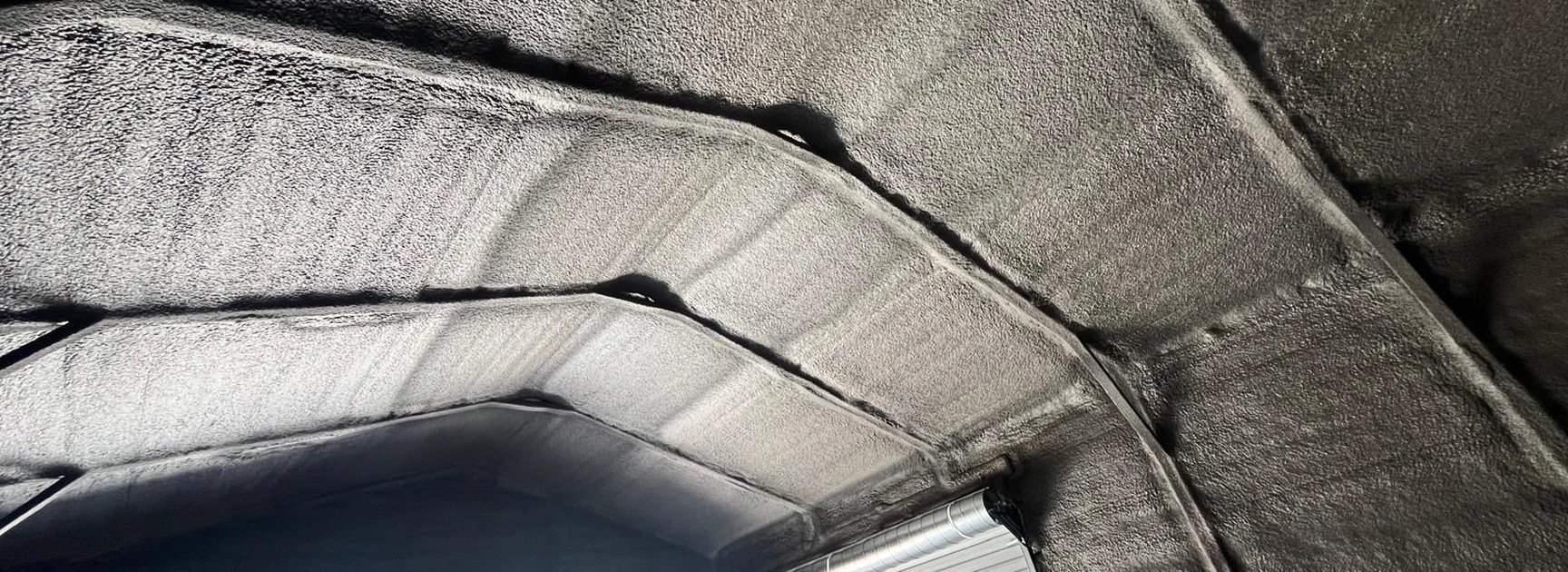
Doing it right the first time means you’ll never have to do it again. And that’s important to us. Here's what sets us apart:
We Do What We Say We're Going to Do: Our reputation is built on reliability and attention to detail. When we commit to a project, we see it through with professionalism.
We Handle Custom Projects: Not every barndominium is standard, and we take the time to handle custom projects that other contractors won't touch. Whether you have exposed beams, unique ceiling treatments, or complex architectural details, we have the expertise to insulate it properly.
We're Direct Installers: When you call Spray Foam of Texas, you're getting the same team from estimate to installation to warranty service.
We Stand Behind Our Work: Our two-year warranty isn't just a piece of paper. If your insulation cracks, we’ll be back out to fix it. We guarantee our work will be done right.
We Service Central Texas: From Bell County to Austin, including Georgetown, Round Rock, Leander, Kempner, and Dripping Springs, we know this market. We understand the unique challenges of insulating barndominiums in our climate, and we have the experience to do it right.

Choosing the right insulation system and the right contractor makes all the difference between a barndominium that performs for decades and one that costs you money, comfort, and headaches.
Whether you're a homeowner planning your dream barndominium or a contractor looking for a reliable spray foam partner in Central Texas, Spray Foam of Texas is here to help.
We offer:
Don't gamble with your barndominium insulation. Do it right the first time.

Yes, barndominiums absolutely need insulation. Metal buildings are highly conductive, meaning they transfer heat and cold rapidly. Without proper insulation, a barndominium becomes unbearably hot in summer and freezing in winter. More importantly, the temperature differential between inside and outside creates condensation on metal surfaces, leading to rust and structural damage over time. Proper spray foam insulation creates a vapor barrier that prevents moisture damage, seals air leaks that waste energy, and maintains comfortable indoor temperatures year-round. Skipping insulation will result in astronomical energy bills, premature rust damage, and an uncomfortable living space.
Closed-cell spray foam insulation is the best insulation for a barndominium. Unlike batt insulation or blown-in insulation, closed-cell spray foam creates a complete vapor barrier directly against metal surfaces, preventing the condensation that causes rust. It adds structural rigidity to thin metal panels, seals every air leak, and provides superior R-value per inch compared to traditional insulation. While the upfront cost is higher than fiberglass or other types of insulation, spray foam saves an average of 40% on utility bills, lasts forever without settling, and prevents pest infiltration. For metal building insulation, nothing performs as well as quality closed-cell spray foam applied by professional contractors.
While DIY spray foam kits are available, we strongly discourage DIY barndominium insulation. Professional spray foam requires precise chemical mixing, proper temperature control, and specialized equipment. DIY kits have approximately a 50% failure rate, and even successful applications often yield only 50% of expected coverage. Failed DIY spray foam causes persistent odors, poor thermal performance, and wasted money. Professional installation ensures proper preparation, complete envelope sealing, correct application, and warranty coverage. The investment in professional spray foam contractors pays off through guaranteed performance and long-term results.
A 2,000 square foot barndominium with ten-foot walls and standard roof pitch typically costs around $13,000 to insulate properly with spray foam. This assumes approximately 10,000 board feet at $1.30 per board foot, with three inches of closed-cell foam on the ceiling (R-22 to R-38) and two inches on the walls (R-14). Prices range from $5 to $10 per square foot of living space depending on project complexity, custom features, and foam quality. While this represents a higher upfront investment than batt insulation, the 40% average utility bill savings and permanent performance make spray foam the most cost-effective long-term solution.
Absolutely. Spray foam insulation is worth every penny for barndominiums. The 40% average savings on utility bills means the investment pays for itself over time, but the benefits go far beyond energy savings. Spray foam prevents rust by creating a vapor barrier against metal surfaces, eliminates pest infiltration, adds structural support that improves hail resistance, and provides soundproofing from rain and outside noise. Unlike batt insulation that collapses or blown-in insulation that settles, spray foam lasts forever without losing R-value. For metal building insulation, spray foam is the only solution that addresses all the unique challenges barndominiums face while delivering superior comfort and protection.
For barndominiums in Central Texas, we recommend R-22 to R-38 for ceilings and R-14 for walls. R-22 is the old code minimum and provides adequate performance, while R-38 delivers maximum energy efficiency for those wanting the best results. Most barndominiums are built outside city limits, where newer building codes may not apply, but meeting or exceeding these standards ensures comfort and efficiency. These R-values translate to approximately three inches of closed-cell spray foam on ceilings and two inches on walls. Your specific needs may vary based on climate, building design, and personal comfort preferences.